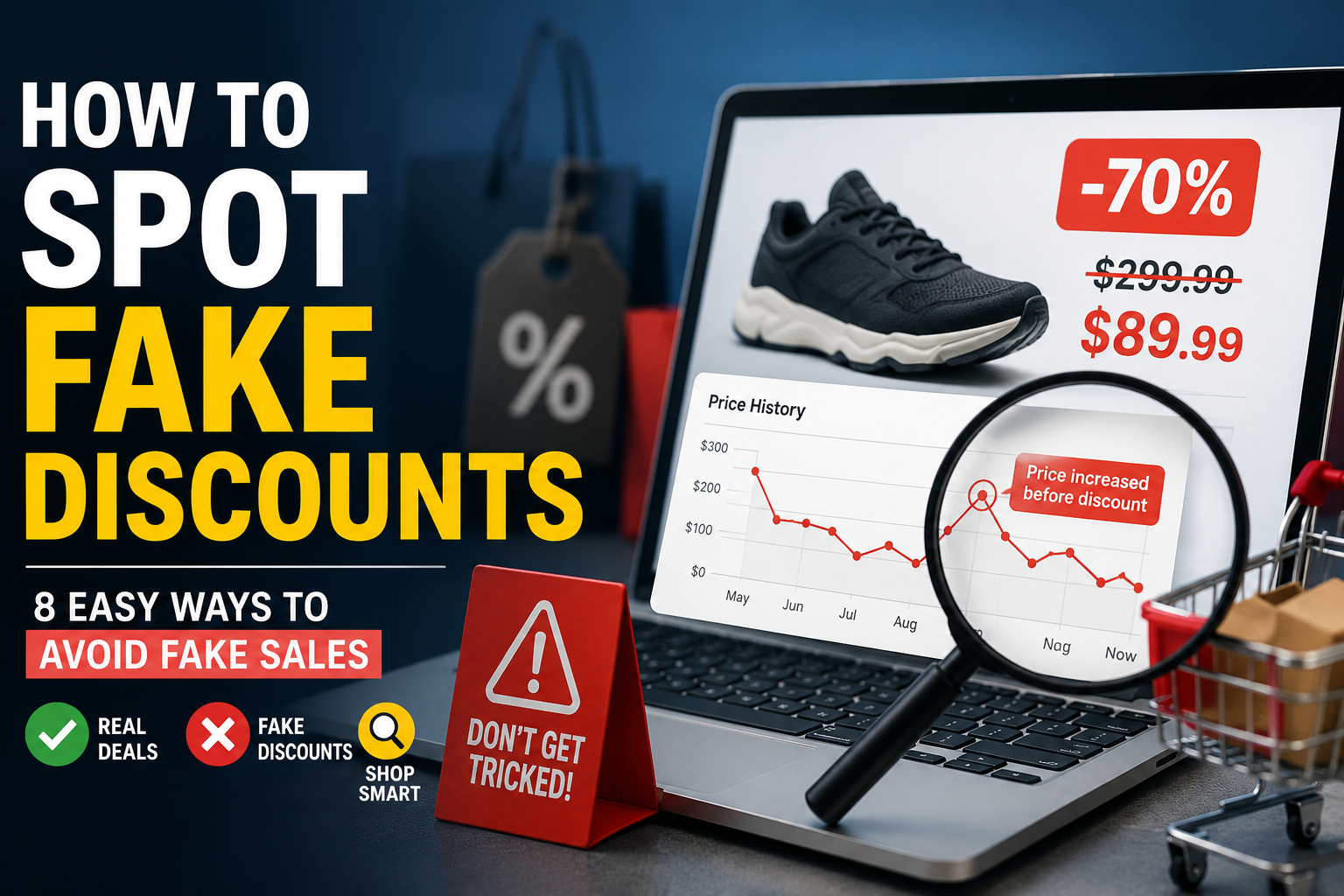
Online shopping is great for finding deals, but watch out—a lot of retailers play tricks with their discounts. They'll show you a huge percentage off and make you think you're saving a fortune, but the actual savings? Way smaller than it looks. Sometimes there's barely any real discount at all.
Learning How to Spot Fake Discounts is an essential skill for anyone who shops online. Whether you're buying electronics, clothing, home appliances, or everyday essentials, understanding how discounts work can help you avoid spending more than necessary.
In this guide, you'll discover eight practical ways to identify fake discounts, understand common pricing tricks, and make smarter purchasing decisions.
What Are Fake Discounts?
A fake discount is basically when a retailer shows you a price cut that looks like a huge deal, but when you dig deeper, you're not actually saving much—or anything at all. It looks good on paper, but it doesn't deliver what it promises.
Some examples include:
- Raising the product price shortly before a sale and then advertising a large discount.
- Displaying an inflated "original price" that was never charged.
- Advertising permanent sales that never end.
- Using misleading percentages to make small savings look substantial.
These misleading discounts can make customers feel pressured to buy quickly, even when the deal isn't exceptional.
Fortunately, there are several ways to verify whether a discount is genuine.
Let's do this. Search to start tracking what you actually care about.
Why Do Online Stores Use These Pricing Tactics?
Not every retailer uses deceptive pricing, and many promotions are legitimate. However, competition in e-commerce encourages businesses to attract attention through discounts because shoppers naturally respond to products labeled as "On Sale."
Behavioral research shows that consumers often focus on the percentage saved rather than the final price, as demonstrated by this study. That's why a product advertised as 50% off feels more attractive than one simply listed at a competitive everyday price.
This doesn't automatically mean the discount is fake—but it does mean it's worth verifying before making a purchase.
8 Easy Ways to Spot Fake Discounts
1. Check the Product's Price History
Here's the honest truth: the best way to tell if a discount is actually real is to check what the product cost before. Don't just believe whatever percentage they're showing you.
Instead, look back at the price history—check what it was a few weeks or months ago. That's when you'll see if it's a real deal or just marketing.
For example:
- June: $249
- July: $249
- One week before sale: $299
- Sale price: $249
Although the store advertises a 17% discount, you're actually paying the same price customers paid before the sale.
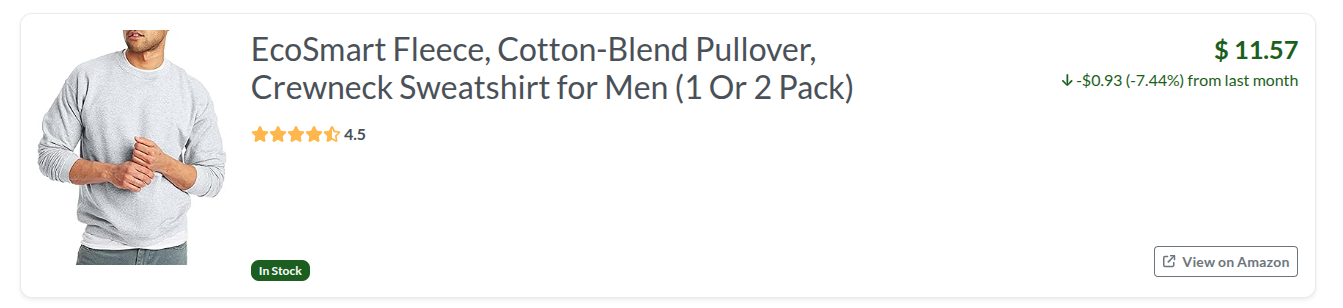
Using price tracking tools such as Bubeph allows you to view historical prices and determine whether today's deal represents genuine savings.
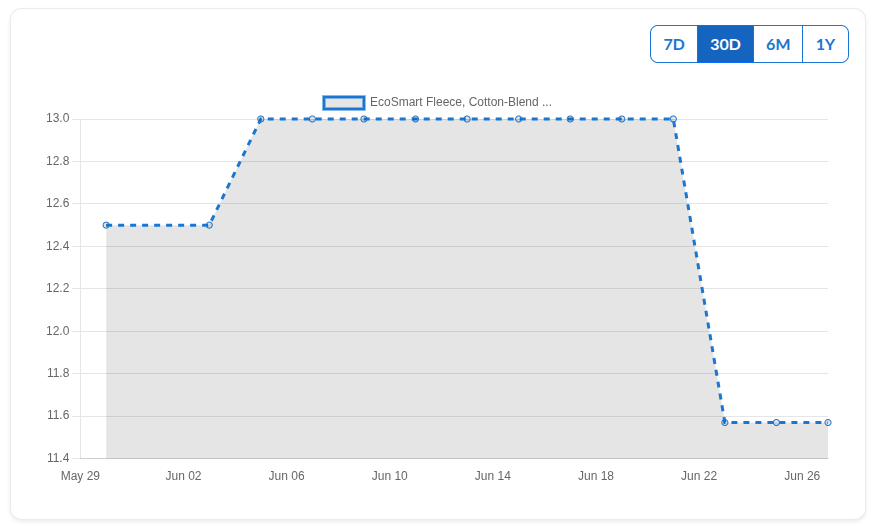
Taking this example, from June 6 until June 22, the price remained the same, but after June 22 it returned to the original price, and the product was falsely advertised as discounted.
2. Don't Focus Only on the Discount Percentage
Many shoppers immediately notice statements like:
- 40% OFF
- Save 60%
- Limited Time Offer
However, the percentage itself doesn't determine whether you're getting a good deal.
Instead, ask yourself:
- Is this the lowest price the product has been?
- Have I seen this item cheaper before?
- Would I still buy it if there were no percentage displayed?
The actual selling price matters far more than the advertised savings.
3. Compare Product Prices Across Multiple Stores
One retailer's sale price may still be higher than another retailer's regular price.
Before purchasing, always compare product prices across several trusted online stores.
Price comparison takes only a few minutes and often reveals better deals elsewhere.
This is one of the simplest online shopping tips that consistently saves money.
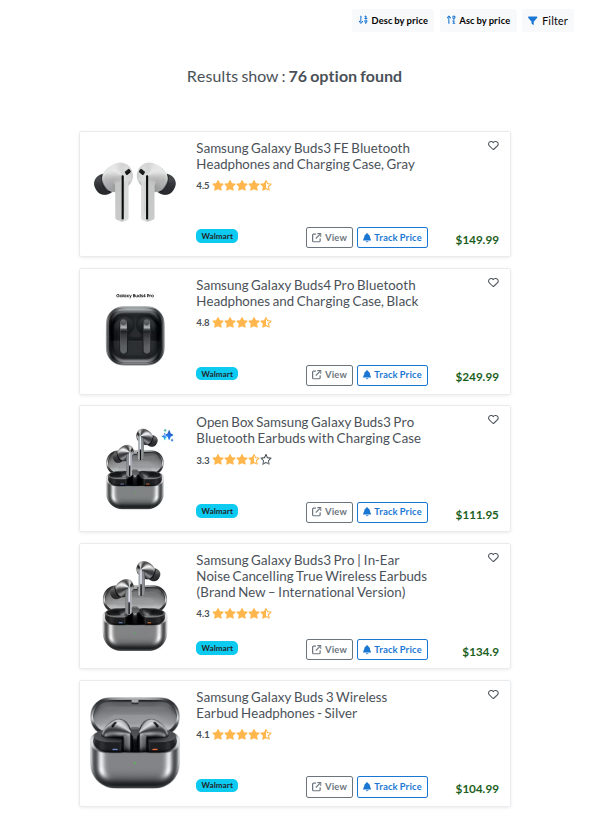
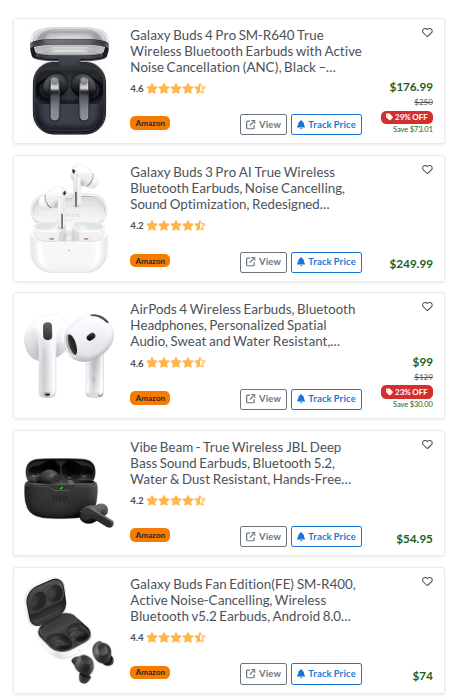
and the search feature brings in all possible products from multiple stores (for now, only two stores are supported)
This is an example of a search for "samsung airpods"
4. Watch for Price Increases Before Major Sales
One common form of price manipulation occurs when retailers increase prices shortly before major shopping events.
Later, they reduce the price back to its previous level while advertising a significant discount.
Although many stores offer genuine promotions during sales events, this tactic is one reason shoppers should verify price history instead of relying solely on promotional labels.
5. Be Careful During Black Friday and Holiday Sales
Many shoppers expect every Black Friday promotion to be the lowest price of the year.
In reality, some fake Black Friday deals simply restore prices to their normal levels after temporary increases.
In my experience, when tracking a product manually, I check the store every day, and when Black Friday comes, they do not change the price; they only change the label.
That doesn't mean every Black Friday deal is misleading. Many retailers offer excellent discounts.
The safest approach is to compare historical prices before purchasing rather than assuming every promotion is exceptional.
6. Don't Let Countdown Timers Rush Your Decision
Many online stores display messages like:
- Only 5 minutes left!
- Sale ends today!
- Only 2 items remaining!
These urgency tactics encourage faster decisions.
Before purchasing, take a moment to:
- Compare prices
- Check reviews
- Verify historical pricing
- Decide whether you actually need the product
Good purchasing decisions are rarely improved by unnecessary pressure.
And this tactic is revealed by tools that help detect changes
7. Read Product Reviews Alongside the Discount
Don't get fooled by a crazy low price. Those super cheap deals often come with a catch—bad reviews, poor quality, stuff that breaks, unreliable performance.
People bought it thinking they were getting a bargain, but it turned out to be garbage. Sometimes spending a little more upfront saves you a headache down the road.
Before purchasing, check:
- Customer ratings
- Verified reviews
- Product specifications
- Return policies
A slightly more expensive product with better reviews often provides better long-term value.
8. Use a Price Tracking Tool
One of the easiest ways to avoid fake sales is to let technology do the work.
A price tracking tool records historical prices and notifies you when products actually become cheaper.
Instead of guessing whether today's promotion is genuine, you can make purchasing decisions using real pricing data.
This approach removes much of the uncertainty from online shopping.
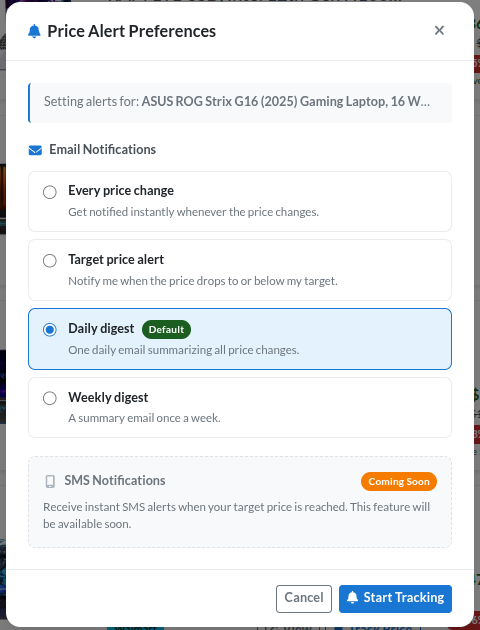
By the way, you can set up alerts to receive any product price changes by email.
Common Signs of Misleading Discounts
Watch for these warning signs:
- Extremely high "original" prices that seem unrealistic.
- Products that appear to be permanently on sale.
- Large discounts without any historical price evidence.
- Countdown timers that repeatedly restart.
- Discounts that still leave the product more expensive than competing retailers.
- Promotions designed to create urgency instead of providing real value.
A single red flag might not mean anything. But if you're seeing a bunch of them together? That's your cue to do some digging and figure out what's really going on with this deal.
My Experience Tracking Online Prices
Working on Bubeph, I've spent a ton of time digging into how prices actually shift across different products.
And I've noticed something pretty interesting: those huge discounts they're advertising? They're usually not the best deals you'll find.
What I've actually seen is that most products go through little price dips throughout the year, and honestly, the real lowest price usually shows up when there isn't a big shopping event happening.
It was a good reminder that if you actually look at the price history, you'll make way better buying decisions than if you just trust whatever sale label they're slapping on it.
Final Thoughts
Learning how to spot fake discounts doesn't require complicated tools or advanced shopping knowledge.
By checking price history, comparing retailers, reading reviews, and avoiding impulse purchases, you can identify misleading discounts and make more informed buying decisions.
See a crazy discount? Don't just click buy. Take two minutes to verify it's legit. Trust me, those couple of minutes could end up saving you more than the actual discount ever would.
Ready to shop smarter? Start comparing prices and checking price history before your next purchase.
Frequently Asked Questions
How do I know if a discount is real?
The best way is to check the product's historical prices, compare prices across multiple retailers, and avoid relying solely on the advertised percentage discount.
Are all online shopping discounts genuine?
No. While many retailers offer legitimate promotions, some use pricing tactics that make discounts appear larger than they actually are.
What are fake Black Friday deals?
These are promotions where products may have been temporarily priced higher before Black Friday, making the advertised discount appear more significant than the actual savings.
Why is price tracking useful?
Price tracking records historical prices over time, allowing shoppers to determine whether a promotion represents genuine savings or simply a temporary marketing tactic.
What is price manipulation?
Price manipulation refers to pricing practices that make products appear more heavily discounted than they really are, such as temporarily increasing prices before a sale or displaying inflated original prices.
Should I always buy the cheapest product?
Not necessarily. Consider product quality, customer reviews, warranty, and return policies in addition to price. The best value isn't always the lowest price.